BSOS hosted panel seminar with Taiwan Top 3 domestic financial institutions
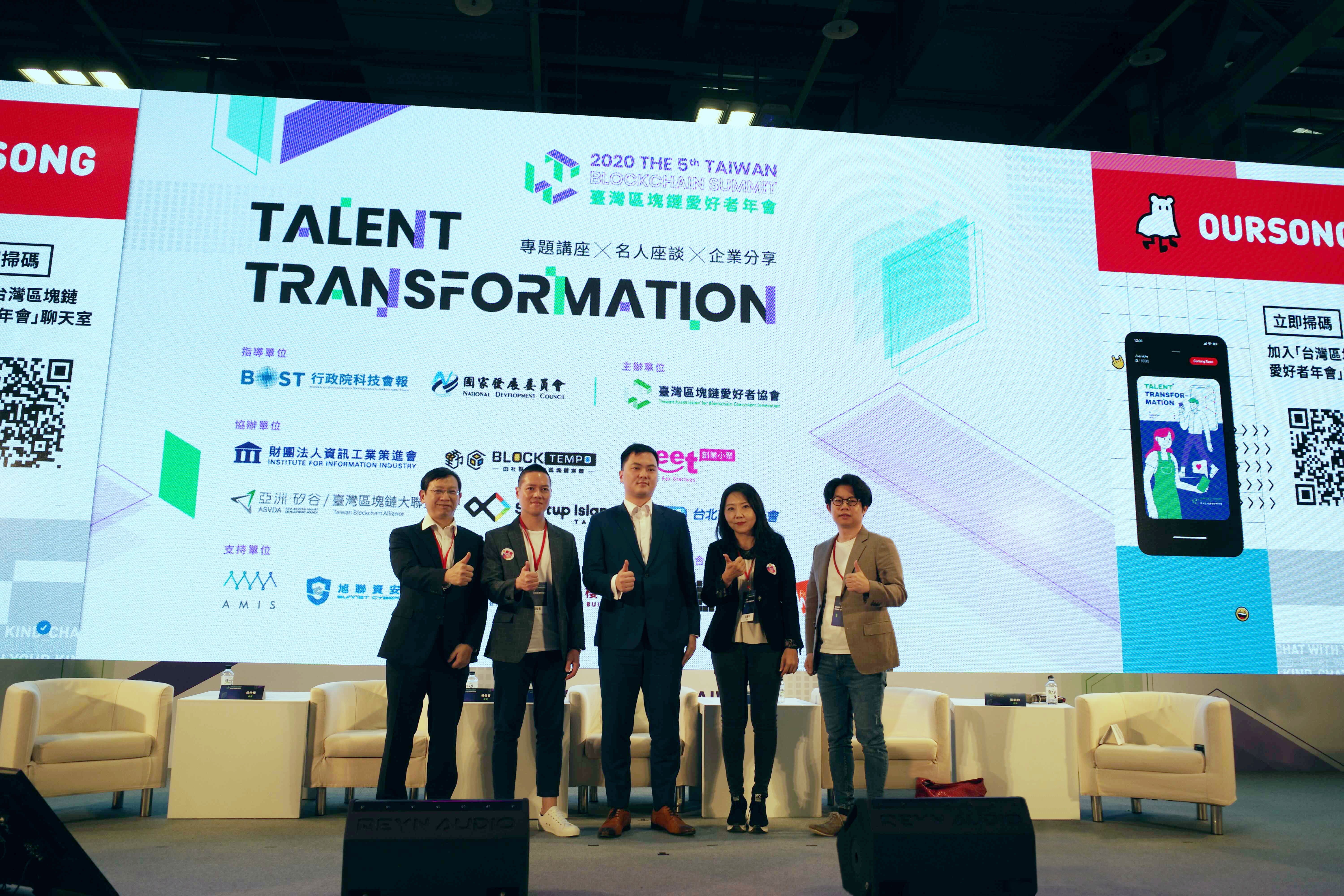
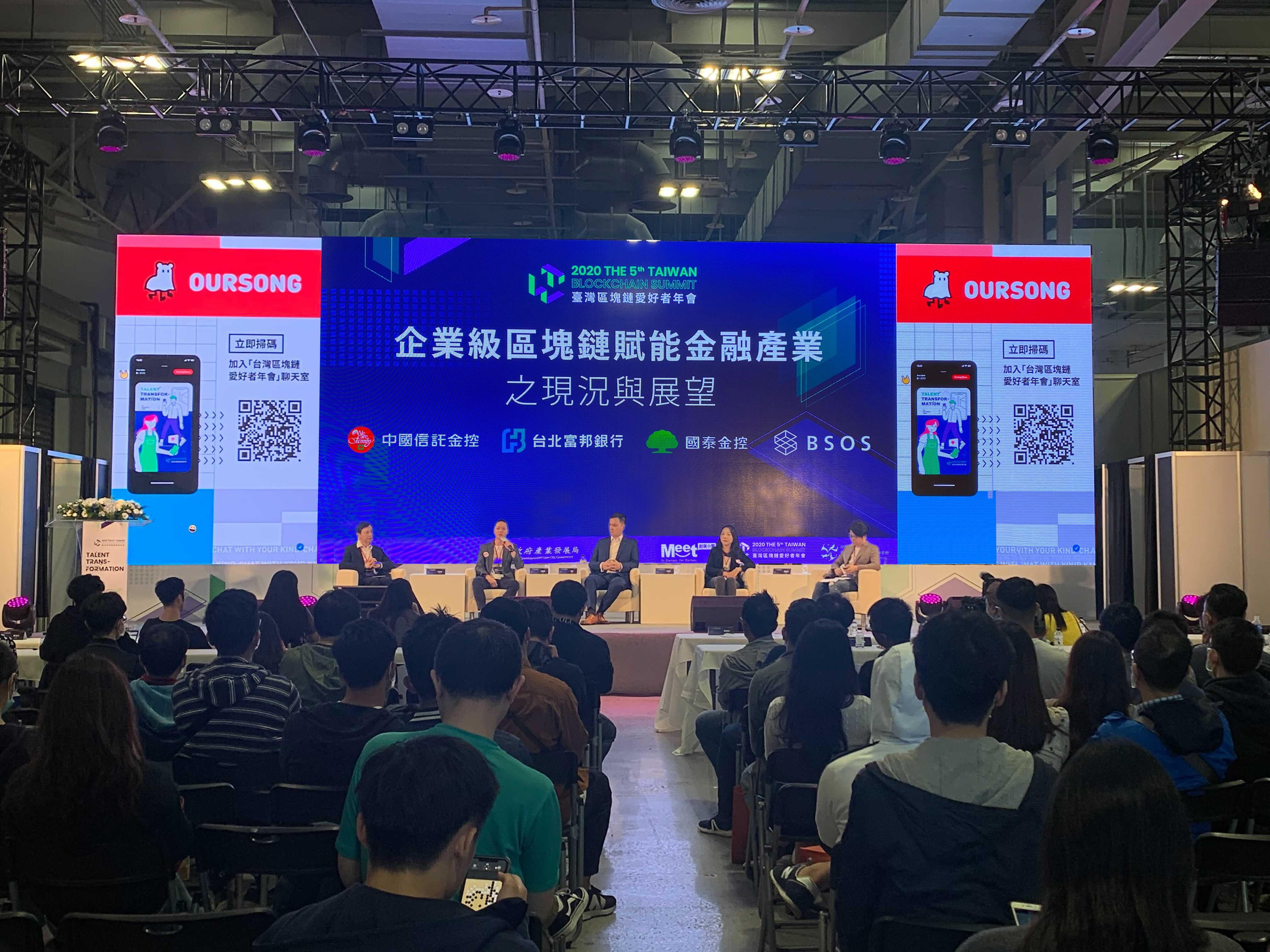
So far, the development of blockchain technology has gradually entered the financial industry. This year is a turning point in the digital transformation. There are many major multinational financial institutions that have expanded their development of blockchain. Three major financial holdings in Taiwan, Cathay, Fubon, and CTBC, have not fallen behind, and they have all performed even better this year, showing more positive and innovative attitude.
Cathay is ready to enter the internal promotion stage
Cathay announced for the first time this year that they would publish a blockchain landing application in June, and an "Electric Vehicle IoV Blockchain Financial Platform'' at the end of the year. Also, they announced that they have worked with financial peers to form a Global Trade Blockchain Alliance to promote the large-scale adoption of blockchain technology among financial institutions.
Begin to shine, establishment of interbank alliance
Yang Junshu, the head of the blockchain team of Cathay Financial Holding Digital Data Development Center, said that Cathay’s blockchain team has been focusing on technology development since its establishment in 2018. Now, after the infrastructure has been set up, it has begun to look for integration. In June 2020, they cooperated with BSOS and ChargeSmith to successfully create a blockchain platform for electric vehicle owners.
He said that Cathay has cooperated with some willing Tesla owners, through the electric car network blockchain financial platform, the driver's driving habits, driving behavior and other data will be uploaded to the blockchain. Until the amount of data is large enough, there are enough patterns. The first stage is to provide Cathay Property & Casualty Insurance and Cathay Bank or other group subsidiaries for use in insurance or cash flow services.
Yang Junshu also pointed out that Cathay has signed MOUs with banks such as Shanghai Commercial Bank, Shin Kong Bank, SinoPac Bank and etc., to cooperate in Global Trade Blockchain Alliance.Many financial institutions hope to use blockchain to optimize trade financing. However, as long as it can be processed with APIs, Cathay will never force using blockchain technology.
In addition, Yang Junshu pointed out that it has two main functions. The first is Data Sharing. But if it only needs to eliminate the behavior of financing with fake invoices, API can achieve the same effects; therefore, the real use of blockchain is to prevent the next step, that is, to ensure that the financing party will not go to other financial institutions for double financing actions.
Yang Junshu said that the financial industry still uses email, telephone or even paperworks to process data when exchanged due to the lack of credible data sharing platform. In the future, as long as the unified document type of the Global Trade Blockchain Alliance is adopted, whether it is an invoice, bill of lading or order, etc., participants can easily determine whether it is fraud or duplicate financing.
Blockchain product design
With two years of development experience from the perspective of financial control, Yang Junshu summed up the principles of three-point blockchain product design.
First of all, before designing a product, you must ask yourself first - who needs the nodes. For example, some participants in the trade financing may not be willing to spend extra costs to maintain the node for data sharing.
The second is to consider the necessity of blockchain. Yang said that basically in any industry, as long as there is a situation of inter-industry information exchange, blockchain can be used, and business partners can no longer dispute with each other about which centralized storage point the database should be stored in; moreover, after adopting blockchain technology, you will also find that some scenarios that were difficult to carry out digital transformation are slowly beginning to become feasible.
The last point is the design of the data on blockchain. Yang Junshu said that the current main trend is don’t put the customer's personal information on blockchain. For example, the global trade blockchain alliance only puts the number of the transaction document on chain, and the rest of the information is kept by the participants.
In summary, a fairly clear idea is obtained, that is, when the problem focuses on the data exchange or value between enterprises, blockchain will be a very suitable technology option.
Sandbox pioneer, Fubon actively invests in the trade finance blockchain
Fubon Financial is the first pioneer in Taiwan to start a blockchain supervision sandbox project. Taipei Fubon Commercial Bank began to promote the blockchain payment application Lucky Pay in NCCU in 2018. Last year in November, they cooperated with Taishin Bank to develop Bagel Pay, an inter-bank transfer wallet, which started a series of blockchain supervision sandbox cases.
After Bagel Pay ended the sandbox ahead of schedule in April this year, Fubon Bank announced in September that it is working with Evergreen Shipping, Yangming Shipping and customs clearance network service providers to launch a new model. The trade financing plan, combined with emerging technologies such as blockchain, is moving towards the trade finance blockchain ecosystem.
Wang Huiling, head of blockchain finance at Taipei Fubon Bank, said that whether it is supply chain finance or trade finance, it is vital for financial institutions to obtain the authenticity of the transaction background. However, the information is pretty complicated. The information silo problems are really serious among various parties such as buyers and sellers, freight forwarders, warehousing operators, and customs. Each acquisition of information is a cost and risk to financial institutions.
The blockchain technology not only allows all participants to enter the same collaborative system, ensuring that everyone can obtain reliable information. But the current alliance consortium blockchain technology can also complete the data exchange and value between enterprises under the premise of ensuring business privacy. If coupled with a smart contract, the bank review process will be transformed into an automated business logic, which can improve the efficiency of the operations of all parties in the entire blockchain.
Talking about the difference between the blockchain system and the traditional e-based system for business units, Wang believes that in the past, the e-based system mainly emphasized reducing the proportion of manual work and improving the efficiency of internal operations. The main control of the system was concentrated in a single enterprise. In the blockchain system, each participant company has a relatively equal relationship, which helps promote mutual trust and cooperation in the entire ecosystem, so that one plus one is greater than two; for example, in the scenario of supply chain finance, each participating company can divides and circulates accounts receivable assets on blockchain, and even circulates from the first-tier supplier to the second-tier and lower-tier suppliers, accelerating the realization of the assets of the manufacturers on the blockchain, and greatly improving the competitiveness of the supply chain.
Finally, Wang Huiling shared Fubon Bank's interpretation of blockchain in financial empowerment:
Transaction data, Data Credit, Credit Monetization
CTBC pleased to see peers join, officially entered a full commercial transformation
CTBC has invested early in the development of blockchain. In 2017, it began to cooperate with HSBC, Standard Chartered Bank, BNP and other multinational banking giants. Based on R3 Corda architecture, they jointly launched the Trade Finance blockchain platform, Voltron (which has been renamed Contour), just finished a few months of beta testing of the commercial version in October this year, and is now preparing for a full commercial transfer.
In addition, CTBC brought its international experience back to Taiwan. In 2018, it had a tripartite cooperation with Yangming Shipping and Chi Mei Industrial, and used Voltron to launch Taiwan's first blockchain international trade proof of concept (PoC). Since its development, it also began to recruit some large-scale enterprise users last year. CTBC has increased its promotion to manufacturers this year.
Key development directions: supply chain and cross-border trade, health care and insurance
Rio, head of CTBC blockchain laboratory, said that the overall financial industry's promotion of blockchain technology in the supply chain and trade financing fields is already a basic development direction. In fact, we can now see that the three major financial controllers in Taiwan are unanimously working in this same direction; and Rio also emphasized that they are quite happy to see the trend of their peers joining one after another.
Rio also shared two key messages he observed. One is that he believes that the blockchain has finally officially entered the stage of full commercial transformation this year. The main reason is the phenomenon-level disaster caused by COVID-19, which indirectly leads to digital transformation. It has become the only solution; the second is the performance of the blockchain in the medical field, and it has also passed the actual combat test after the outbreak of the epidemic. The eClaim claims blockchain of Taiwan Life Insurance and Kaohsiung Rong has accidentally become a killer application.
Rio pointed out that the global supply chain is facing severe challenges under the influence of geopolitics, the impact of the epidemic, and changes in consumer behavior. These challenges have brought changes to the supply chain, prompting the supply chain to begin to move towards short-chain, multi-polarization, automation, etc. . Rio pointed out that in the course of this series of transformations, companies will need to face the trust problem generated by the decentralization and unmanned information, which is a major contribution to the comprehensive commercial transformation of the blockchain. Where the value lies.
Rio concluded that the supply chain, cross-border trade, and medical fields will definitely be the main battlefields of the blockchain in the next three to five years. It is strongly recommended that major enterprise-level blockchain development companies focus on them. He also added that the development of digital assets such as Bitcoin (BTC) has made central bank digital currencies (CBDC) an irreversible trend, so the specific direction is also worth paying attention to.
Practice Open Banking, unify blockchain resources
It is worth mentioning that, in order to integrate the resources of the blockchain industry, CTBC will launch a platform as the blockchain Marketplace, hoping to connect the financial industry, blockchain startups and information service providers to facilitate investment promotion. Rio revealed that the platform has entered the final testing stage and will be launched as soon as January and February next year.
For this reason, CTBC has set a goal this year to solve the bottleneck that the blockchain may encounter in Open Banking, that is, how to quickly be compatible with other systems. Li Yue said that for this, they also need to join hands with a large number of service providers and shipping partners to establish standardized system modules, which are then promoted by the service providers.
It is worth mentioning that, in order to integrate blockchain resources, CTBC also developed a platform as a blockchain marketplace this year, hoping to connect the financial industry, blockchain startups, and investment service providers in order to attract investment. The progress. Li Yue revealed that the platform has entered the final testing stage and will be launched as soon as January and February next year.
2021-2022 is the blockchain business promotion year
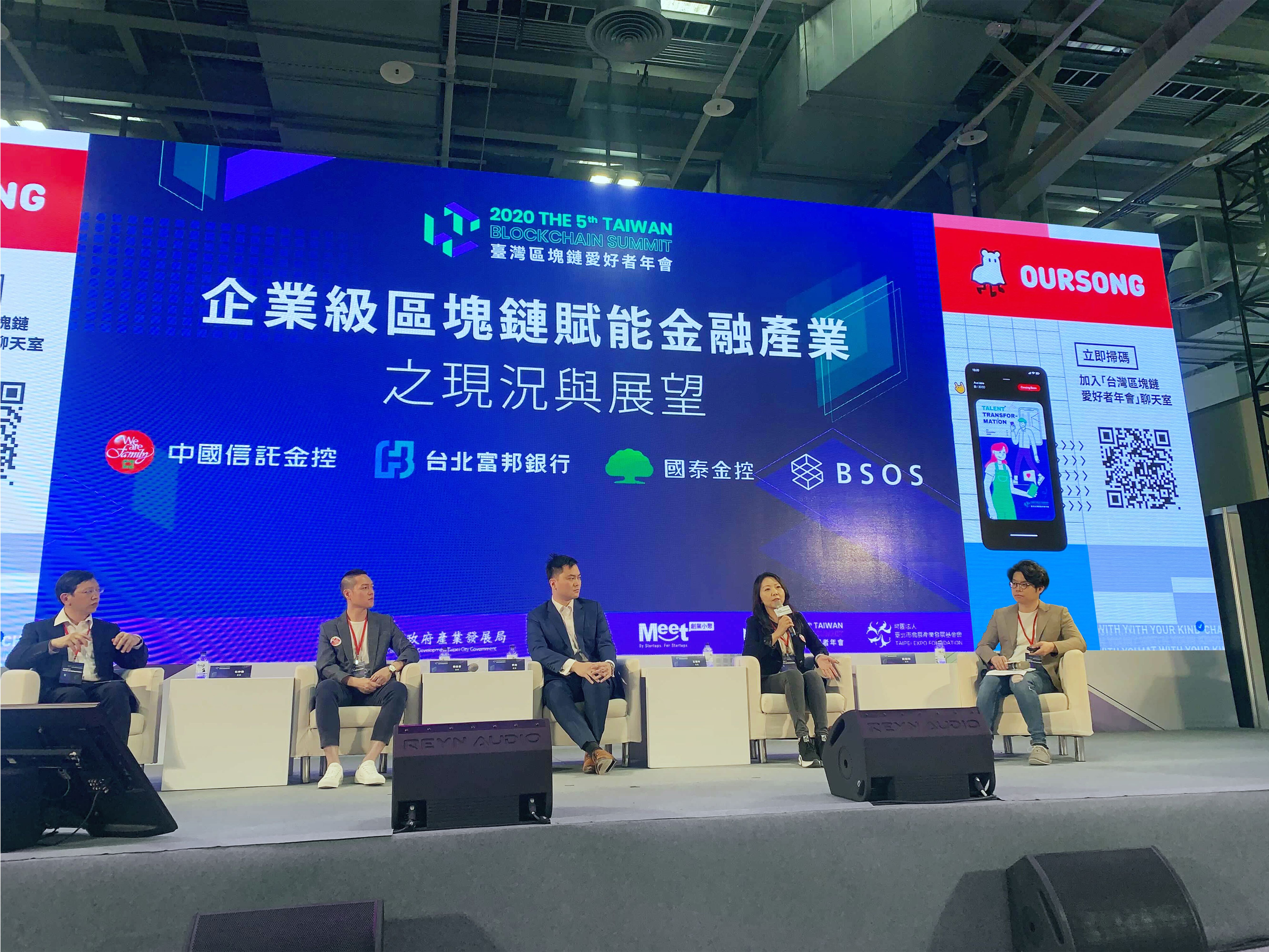
In addition to the three major financial players, Kenneth, who also participated in this forum, is the former R3 Greater China project lead. Based on his experience in promoting industrial blockchain internationally in the past four years, he put forward his views on the future and gave suggestions for the domestic blockchain industry.
Kenneth pointed out that distributed ledger technology (DLT) is the current trend and is gradually solving the problem of real business scenarios. Compared with the past, the blockchain industry has paid more attention to technology, and in recent years has paid more attention to the scene. He believes that 2021-2022 will be the year of blockchain commercial promotion. Each DLT platform will evolve in a deeper direction, and the cloud industry will also take advantage of it to provide a more complete BaaS blockchain service.
Commercially, Kenneth shared the trends he saw: Judging from successful cases, both domestically and internationally focused on supply chains, "taking enterprise as the foundation and financing as the goal." Large-scale international financial groups mostly integrate themselves as a network while banks and enterprises focus on trade financing. Technically, Kenneth believes that in the industyl field, cross-chain is still not the focus, but he has observed that the Layer 2 cross-platform language of alliance chains has begun to appear in foreign countries. Although it is not a true cross-chain, it is enough to relieve customers from specific problems. Risks on the platform. In addition, another focus of foreign distributed systems is privacy computing and multi-party secure computing (MPSC).
BSOS: Enterprise blockchain is a technology for ecological cooperation
It is the very first time that three major financial institutions gathered together on the same stage talking and discussing their practical experiences and prospects of the blockchain. It is extremely meaningful. Really thanks for BSOS for gathering all of these talented speakers together! BSOS has dedicated to enterprise blockchain and has developed numerous blockchain use cases, including PoC and go-into-production. At the end, BSOS CEO Daniel said:
In the past practice process, we constantly reflect on what value can bring to the industry. Later, we deeply realized that in the enterprise field, blockchain is not necessarily about subverting anyone, but more like a cooperative technology - a technology about multi-party data governance, and ecological cooperation. Today, I am honored to witness that the three major domestic financial holdings are discussing the development and application of blockchain on the same stage. This is the best embodiment of the spirit of blockchain.
Media link: https://www.blocktempo.com/5th-taiwan-blockchain-summit-financial-magnates/